
 Back to Living Notes
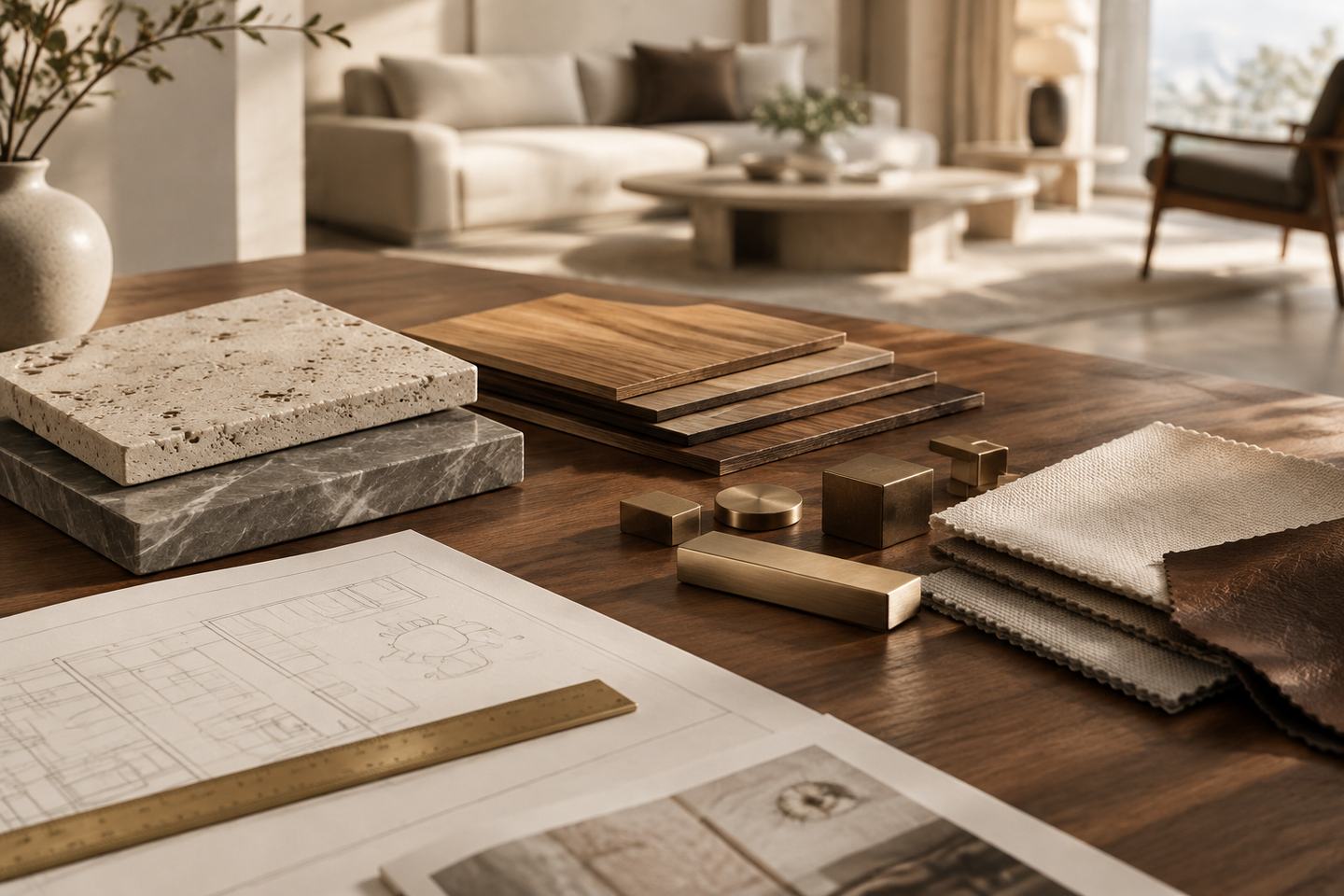
When choosing a material, what you see before you is color and texture, but what you will face later includes foot traffic, touch, cleaning, and repair. Bringing these matters into the selection process in advance can reduce the haste of deciding based only on a sample's first impression.
Aesthetics still matter, but after "I like it" you should keep asking: Where will it be used, who will touch it often, and can you accept how it changes with use?
This article aims to translate material selection from "does it look good" into six dimensions that can be checked. It applies to stone, wood veneer, metal, and fabric alike.
Tactile temperature: the first reaction when your hand touches it
The temperature sensation when a material is touched directly affects the psychological feel of a space. Stone and metal feel cooler to the touch, while wood veneer and fabric feel warmer. This is not mysticism; it is the physical difference in thermal conductivity.
The same piece of stone may feel different in a room with air conditioning and one without. Frequent barefoot activity, underfloor heating, or cleaning methods can also affect how residents perceive the material.
Entryways, living rooms, and bedrooms do not need to be fixed to a certain material because of the room's name. You can try touching and stepping on samples at actual use temperatures, then choose based on wear resistance, slip resistance, and cleaning needs; rugs should also consider fixation methods and cleaning convenience.
Judgment method: Compare candidate samples' tactile feel in the same environment while also understanding the surface treatment. Touching by hand can only help compare experiences; it cannot replace material performance testing.
Acoustic performance: the material's effect on sound
Sound is related to surface materials, but also to room volume, furniture, and construction. Large areas of hard surfaces may increase reflection, while fabrics, rugs, and targeted sound-absorbing construction can help improve it; ordinary wood veneer is not inherently a sound-absorbing material.
Open spaces and double-height spaces require judging acoustic performance based on overall conditions; reverberation time cannot be estimated from living room area or stone proportion alone.
If public areas use large areas of stone, sound absorption can be arranged through furniture, curtains, or designed acoustic construction, but specific products and installation methods must be verified. When there are clear acoustic goals, professional calculations or measurements should be used.
Judgment method: Listen to speech and echoes in different positions as clues for identifying problems; when performance needs to be determined, use the corresponding professional measurement methods.
Maintenance cost: ongoing investment after move-in
Maintenance costs vary greatly among different materials. White marble floors look beautiful but require regular waterproofing and stain-proofing treatment; natural wood veneer furniture has good texture but fears water and sunlight and needs care; brass hardware naturally oxidizes and changes color, and if you do not accept that, it must be wiped regularly.
Staining, sun exposure, surface oxidation, and friction marks may gradually appear during use. During selection, first distinguish which changes are acceptable and which affect function or require repair.
When selecting materials, confirm cleaning products, maintenance frequency, and repair methods at the same time. Whether stone needs crystallization and whether wood veneer can use wood wax oil depend on the specific material and surface treatment, and should follow the supplier's instructions. Families with children can prioritize easy cleaning, stain resistance, and replaceability, without necessarily ruling out light colors altogether.
Judgment method: Ask the supplier, "How is it maintained after move-in, how often, and at what cost?" If they cannot answer, the maintenance cost may exceed expectations.
Batch stability: the biggest variable in natural materials
Natural materials (stone, wood veneer, genuine leather) all have batch differences. The same marble from different quarries may have completely different colors and veining; the same walnut veneer from different batches may show visible color differences.
Batch differences in natural materials are a condition to watch for during selection and upon delivery verification. The design plan is confirmed based on samples, and if color differences from the samples are discovered only after delivery, replacement, schedule, and acceptable range may need to be discussed again.
When using natural stone or wood veneer over large areas, view relatively complete slabs or jointed samples to confirm veining, color difference range, and supply batch. If on-site slab selection is needed, agree with the supplier on the location and method; in addition to small samples, keep layout and confirmation records.
Judgment method: Check delivered materials together with confirmed samples, batch information, and agreed requirements; after differences are found, the relevant contract parties confirm how to handle them.
Aging pattern: how materials change over time
All materials age, but they age in different ways. Brass turns bronze-colored after oxidation, natural wood veneer darkens, and leather shows signs of use: these can be considered "aging gracefully." Veneer blistering, lacquer peeling, and fabric pilling are aging badly.
Selection can take a longer view: whether the surface is easy to repair locally, how frequently touched areas wear, and whether similar materials can be obtained for replacement all affect future use.
Natural and man-made materials both have different performance and maintenance conditions; durability cannot be judged by category alone. Whether brass discoloration and wood color changes are pleasing also varies from person to person; blistering, delamination, or cracking should have their causes and product responsibility clarified.
Judgment method: Review used samples, applicable test data, and maintenance instructions; ask about repairable parts and spare parts supply; long-term condition needs to be judged in combination with the environment and usage.
Spatial suitability: choosing materials for different scenarios
The same material performs completely differently in different spaces. Stone performs well in dry areas (living rooms, entryways) but requires attention to slip resistance in damp areas (bathrooms); wood veneer has good texture in dry areas (bedrooms, studies) but is prone to moisture deformation in damp areas (bathrooms, kitchens).
In damp, splash-prone, or sun-exposed locations, focus on verifying water resistance, weather resistance, and surface treatment requirements. Even with the same material name, different substrates, edge banding, and installation methods may lead to different actual application ranges.
List usage conditions first, then choose specific products: entryways focus on wear resistance and wet shoes carrying water, kitchen countertops focus on stain resistance and food-contact requirements, bathrooms focus on wet-state slip resistance and cleaning, and bedrooms focus on tactile feel and daily maintenance.
Judgment method: For each space, first determine functional needs (wear resistance? slip resistance? sound absorption? moisture resistance?), then choose the material with the best texture among those that meet the needs.
Samples should be viewed together with how this home will be used
In the end, material selection is about finding a balance among three dimensions: "good-looking," "good to use," and "easy to maintain." There is no perfect material, only a material combination suited to this space, this family, and this budget.
深圳市熹合空间设计有限公司 adheres to the principle that "only those who have done residential projects understand living," and material sample sealing pays attention to both visible texture and recurring use: how the edge of the dining table is cleaned, where cabinet doors are touched, and how sun-exposed areas change. Samples need to answer these specific questions to help determine the selection.
After confirmation, retain samples, product information, and applicable locations so that the owner, design party, and relevant supply and construction parties have a common basis for verification. If there are changes upon delivery, reassess whether they are compatible with adjacent materials, dimensions, and maintenance requirements.
If you are currently doing material selection for private residence design, it is recommended to go through these six dimensions first before looking at material samples. With a judgment framework, the choice will be much clearer.
Related Questions
Which stones are commonly used in Shenzhen high-end private residence design?
Marble, granite, and other stones each have their own veining and performance, and selection must be based on specific products. First confirm stain resistance, slip resistance, cleaning, and usage location, then look at slabs, veining, and batch; the same name does not mean the same performance can be directly inferred.
How to choose between wood veneer and lacquered panels in private residence design?
While comparing surface texture, verify the substrate, coating, edge banding, durability, and repair methods. For wood veneer, confirm joining and color differences; for lacquered panels, confirm color samples and repair conditions; thickness or price alone cannot determine suitability.
How to choose metal materials in high-end private residence design?
First determine the usage location and contact frequency, then compare the specific surface treatments of stainless steel, brass, or aluminum alloy. Samples need to verify fingerprints, scratches, oxidation, and cleaning methods, while also clarifying the junctions with wood veneer and stone.
What is material sample sealing? Why do it?
Material sample sealing is the preservation of confirmed samples and product information as a reference for delivery, construction interfaces, and subsequent repairs. It can help verify differences, but it cannot guarantee that different batches will be completely unchanged, nor can it replace product testing and construction quality management.
How to choose fabric and leather in private residence design?
Based on sitting and lying habits, cleaning methods, and contact frequency, compare the wear resistance, color fastness, tactile feel, and repair information of specific fabrics. Even if removable and washable, verify washing requirements and shrinkage conditions; natural or synthetic categories cannot replace judgment about specific products.
