
 Back to Living Notes
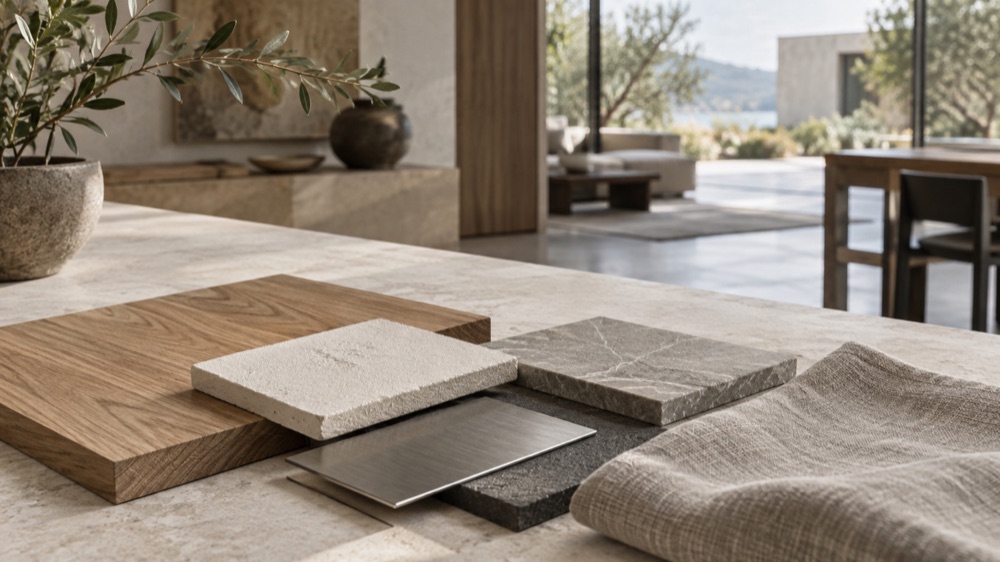
Colors on a screen cannot replace physical objects
Color is affected by lighting, screens and photography, and natural stone also varies with the block and cutting direction. Batch differences in wood veneer and fabrics, as well as the damping of hardware and the feel of door panels, need to be compared using physical objects; only by keeping samples and records will there be a shared reference later.
- The main materials, auxiliary materials and edge trim in the same space need to be confirmed together.
- Samples should note the observation light source and the location of use, to avoid misjudgment caused by showroom lighting.
- When natural materials are involved, it should be made clear that "grain will be similar" rather than promising an exact match.

Keep the samples, and keep the documentation with them
An actionable sample sealing record should at least include the material name, brand or supplier, color code, specifications, surface treatment, batch, location of use, installation direction, edge trim method and out-of-stock alternatives. For furniture, lighting and soft furnishings, dimensions, fabric, color code, quantity, installation conditions and maintenance methods should also be recorded. The more complete the information, the less subsequent purchasing and replenishment depend on individual memory.
- Material numbers must correspond to drawings, lists and on-site locations.
- Batch and supplier information should be kept separately by the owner and the design side.
- Substitute materials must be reconfirmed; do not assume that "similar materials" can be directly substituted.
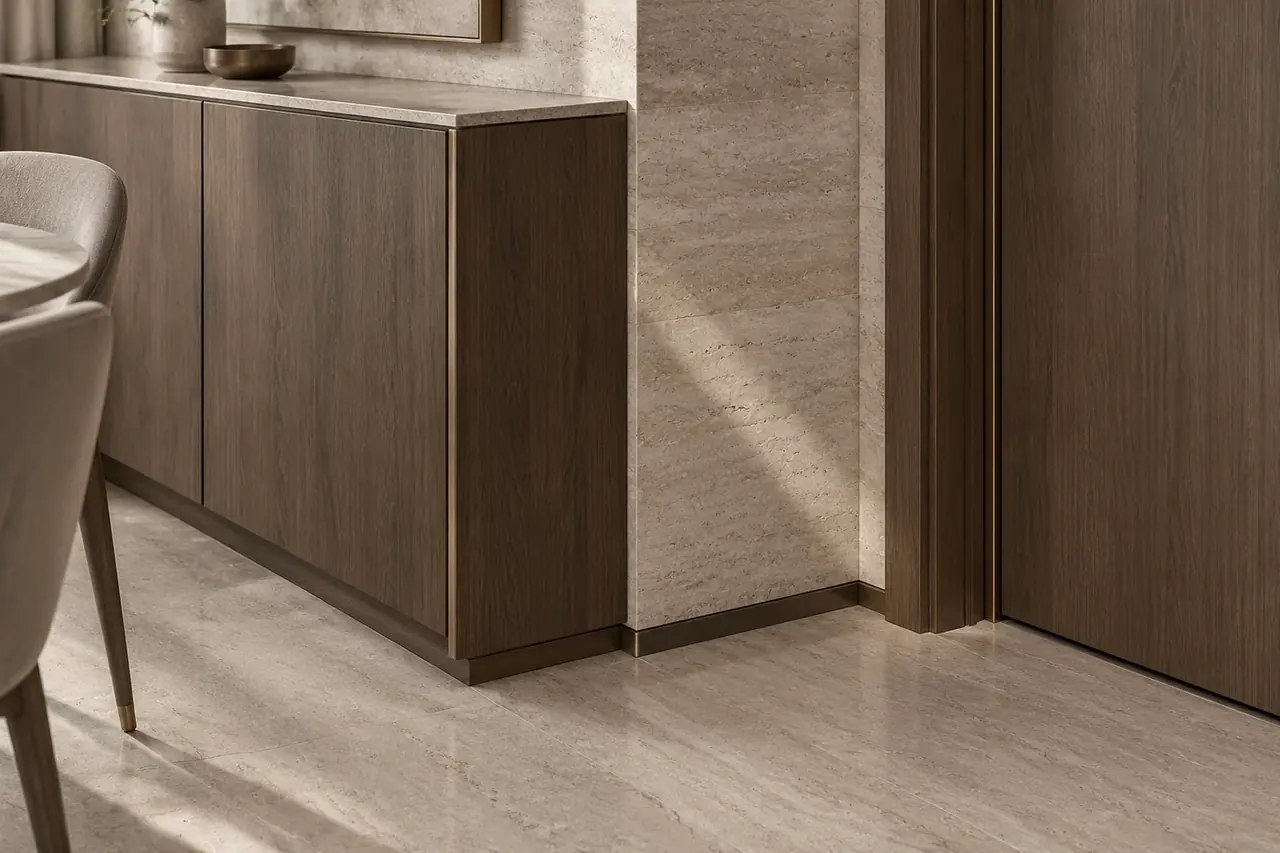
The junction of stone and wood needs to be sample-sealed together
When comparing adjacent stone, wood veneer and edge trim pieces, the connections can be discussed through small detail samples; whether to make them and their scope should be confirmed according to the actual commission, first comparing thickness, corners and joints, then deciding on the respective methods. Only after working on residences can one understand living; whether a section of skirting can be replaced separately later, and whether a cabinet door will hit the wall when opened, are both related to these junctions.
- When confirming main materials, check thickness, corners, joints and construction tolerances at the same time.
- Cabinets, doors, walls and skirting should be judged within the same detail.
- Lighting color temperature changes how materials look; samples are best rechecked on the project site.
After delivery and installation, check separately
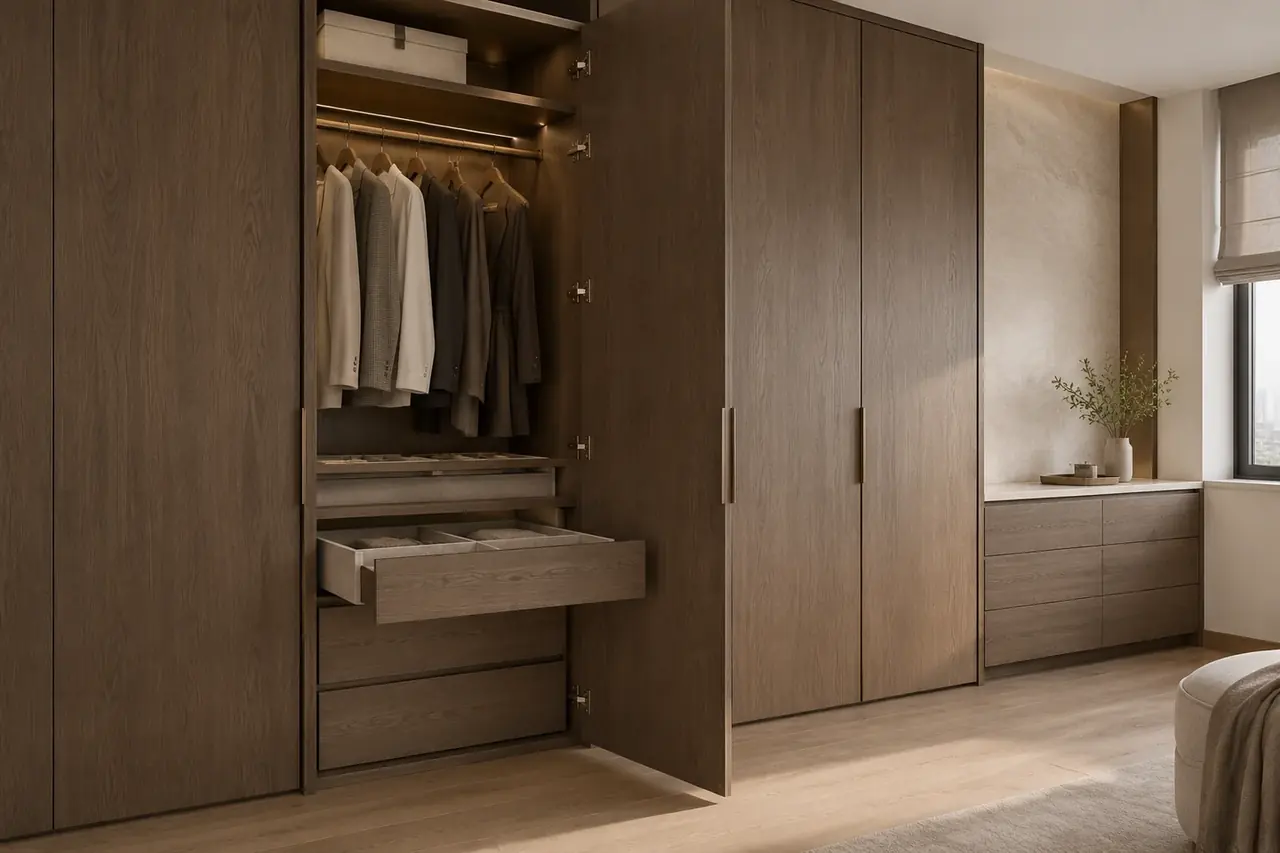
When materials arrive, check the model, batch and appearance by number; after the detail is completed, compare gaps, corners, opening and closing, and surface protection. Design coordination records deviations by bringing drawings, samples and the site together, while construction and supply responsibilities are distinguished according to the contract and actual causes.
- Delivery acceptance focuses on model, quantity, batch and appearance.
- Detail acceptance focuses on dimensions, flatness, gaps and function after installation is complete.
- 深圳市熹合空间设计有限公司 is responsible for design expression and design implementation coordination; construction quality, schedule and product performance are borne by the respective responsible parties.
Frequently Asked Questions
Does sample sealing only require confirming color?
No. Specifications, thickness, surface treatment, batch, edge trim relationships, installation location and maintenance methods also need to be confirmed, especially for natural stone, wood, fabrics and custom furniture.
When a material is out of stock, can it be directly replaced with a similar product?
It cannot be directly replaced. Substitute materials need to be re-compared in terms of color, dimensions, performance, edge trim and supply cycle, and can only be used after confirmation by the owner and the design side.
